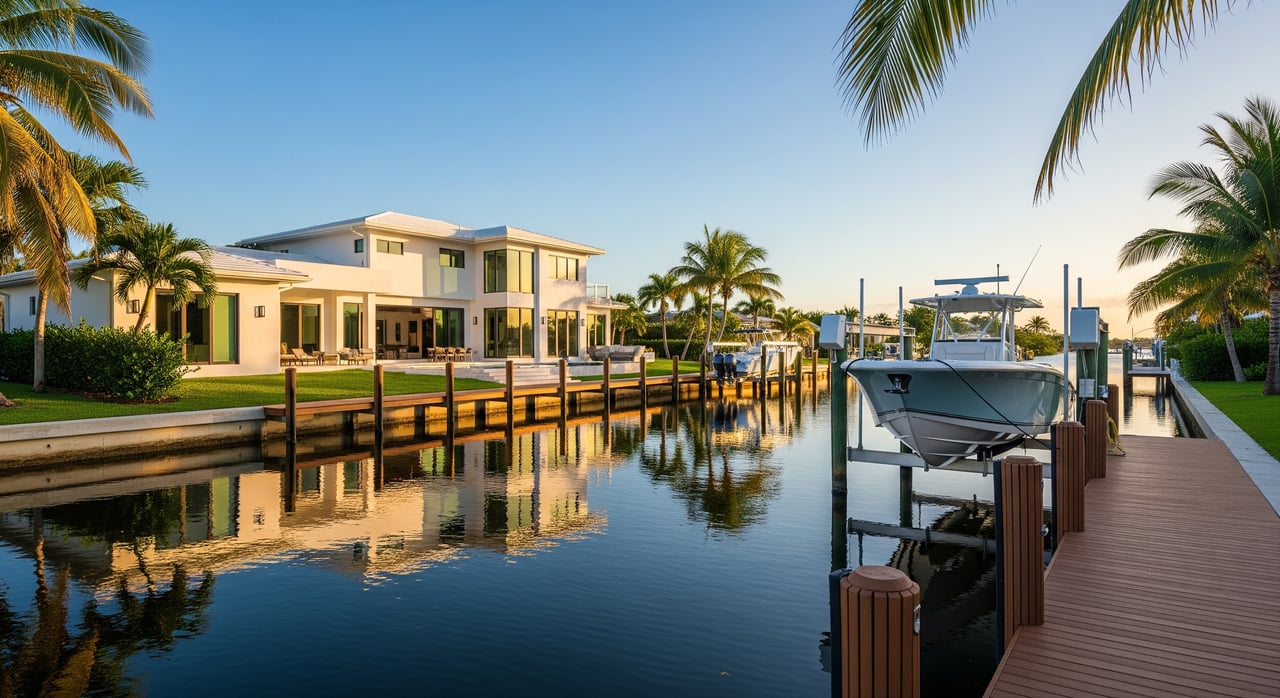
Dreaming of stepping from your backyard onto your boat and cruising to the islands? In Cape Coral, you have choices, and each canal type shapes your daily routine, your boat options, and your budget. If you feel unsure about bridge clearances, dock depth, or which neighborhoods fit your boat, you’re not alone. This guide breaks down canal types, key navigation factors, and practical steps so you can buy with confidence. Let’s dive in.
Cape Coral canal types
Cape Coral has about 400 miles of canals that fall into three buyer-focused categories:
- Gulf-access canals: Connect through Cape Coral’s network to the Caloosahatchee River, Pine Island Sound, and the Gulf of Mexico.
- Freshwater canals: Interior canals that do not lead to the Gulf. They often flow into neighborhood basins and cul-de-sacs.
- Sailboat-access routes: Areas with adequate depth and vertical clearance that allow mast-up transit, either under high fixed bridges or through operable bridges.
Each option supports a different lifestyle. Your best fit depends on your boat size, how often you plan to cruise, and whether you want direct access to open water.
Navigation and lifestyle
Your daily boating experience depends on more than distance. You should consider:
- Route to open water: Most Gulf-access routes run to the Caloosahatchee River, then on to Pine Island Sound and the Gulf.
- Travel time: It varies by property location, boat speed, tides, and any bridge openings. Many Gulf-access owners reach Pine Island Sound in tens of minutes, but timing your specific route is best.
- Tides and currents: Southwest Florida’s tidal range is modest, yet shallow canals and river mouths can be sensitive at lower tides.
Plan a test run at your typical cruising speed and tide. If you are relocating, ask a local captain or your agent to time a transit with you.
Bridge clearance basics
Bridges determine whether taller boats and sailboats can pass. You will encounter three bridge types:
- Fixed high-span bridges: Usually allow taller vessels underneath.
- Fixed low-span bridges: Limit vertical clearance for masts and antennas.
- Movable bridges: Bascule or drawbridges that open on schedule or by request.
Because clearances vary by bridge, avoid relying on a single number for the whole city. Verify your route by checking NOAA nautical charts for listed clearances, referencing state or local bridge data, and reviewing U.S. Coast Guard Local Notices to Mariners for any temporary restrictions. If a movable bridge is part of your route, confirm opening procedures and times.
Depth, tides, and docks
Depth at your dock and along your canal matters as much as vertical clearance. When you tour a property, ask for:
- Depth at mean low water, not just a general estimate.
- Any dredging history or known shoaling in the canal.
- Dock and lift details, including length, power, and weight rating.
Interior canals are often shallower and narrower than main basins and river channels. If you plan to berth a larger boat, confirm turning room, lift capacity, and your expected draft at low tide.
Locks and Gulf routes
For typical Cape Coral routes to the Caloosahatchee and Gulf, there are no major locks to transit. If you plan long-distance cruising elsewhere in Florida, other waterways can include locks, so check those routes separately.
Match canals to boats
Use these practical guidelines as a starting point, then verify on-site measurements and charts:
- Freshwater canals: Best for small skiffs, flats boats, and bay boats around 14 to 22 feet, with some room for 22 to 26 feet depending on width and depth. These suit casual anglers and day boaters, especially if you trailer your boat.
- Larger Gulf-access canals: Commonly fit center consoles, bay boats, cuddy cabins, and small express cruisers in the 24 to 40 foot range. For boats above roughly 30 feet, dock length and lift capacity become critical.
- Sailboats and tall-mast vessels: The limiting factor is vertical clearance. Smaller day-sailors with short masts may fit some interior areas, but cruising sailboats often require routes with high fixed bridges or operable drawbridges. Confirm mast height, clearance, and depth before you buy.
If you are targeting a 30 to 40 foot powerboat, look for Gulf-access homes with about 5 to 8 feet of depth at low tide and a dock length of 35 to 45 feet. For a 40 to 50 foot sailboat, prioritize high-clearance routes and confirm clearance above your mast height with a safety margin.
Access, value, and costs
Waterfront access often commands a premium over non-waterfront homes. In Cape Coral, Gulf-access properties typically sell at a premium compared to interior canal homes because of the ability to reach the Gulf without trailering. The exact difference depends on neighborhood demand, the quality of access, and property condition, so ask for a local market snapshot or CMA when you are ready to compare options.
Also budget for ongoing costs:
- Flood and wind insurance: Premiums depend on flood zone, elevation, and coverage.
- Seawall maintenance: Replacements can be significant, often tens of thousands of dollars. Review inspection history and any assessments.
- Dock and lift upkeep: Confirm lift rating, age, and maintenance records.
Buyer checklist
Bring this list to showings and ask for documents where possible:
- Canal type and route: Gulf-access, interior freshwater, or sailboat-friendly.
- Dock and lift: Exact dock length, lift capacity, and active permits. Confirm power and water at the dock.
- Depth: Measured depth at the end of the dock at mean low water.
- Seawall: Material, age, inspection or repair history, and any assessments.
- Bridge clearances: Fixed or movable bridges on your route, with opening schedules.
- No-wake zones: Any speed restrictions near the property.
- Dredging: Recent canal dredging history or planned projects.
- Flood zone and premiums: FEMA designation and recent insurance costs.
Smart search filters
When you set up a saved search, consider:
- Waterfront: Yes, and specify canal frontage.
- Keywords: Canal, dock, boat lift, Gulf access, no fixed bridges.
- Dock length: Match to your boat length and beam.
- Flood zone: Include or exclude based on your comfort level.
- Price and size: Align with your budget and bedroom needs.
Permits and approvals
Most work on docks, lifts, and seawalls needs permits. Expect to coordinate with the City or County for building permits, and possibly state or federal agencies if work is near or over sovereign waters or wetlands. Ask for copies of existing permits and whether they transfer with the property.
Bilingual support
If you or a family member prefers Spanish, just let us know. Nuestro equipo es bilingüe y con gusto te ayudamos en cada paso, desde la selección de canal y verificación de permisos hasta la inspección y el cierre.
Next steps
Choosing between Gulf-access, freshwater, or sailboat-access routes comes down to your boat, your routine, and your budget. When you test the route, verify bridge clearances, confirm depth at mean low water, and review dock and seawall records, you will feel confident in your decision. If you want a local partner to time a transit, pull a market snapshot, or confirm permit details, reach out. We are ready to help you compare neighborhoods, canals, and homes that match your lifestyle.
Have questions or want to tour canal homes this week? Connect with Jessica Ozuna Torres for friendly, bilingual guidance.
FAQs
What is Gulf-access in Cape Coral?
- Gulf-access means your canal route connects to the Caloosahatchee River and Pine Island Sound, allowing you to reach the Gulf without trailering.
How do bridge clearances affect sailboats in Cape Coral?
- Low fixed bridges can block mast-up transit, while high fixed or movable bridges allow passage, so you must verify clearance along your exact route.
Are there locks between Cape Coral and the Gulf?
- For typical routes from Cape Coral to the Caloosahatchee and Gulf, there are no major locks to transit.
How deep should my dock be for a 30–40 ft powerboat?
- As a starting point, target about 5–8 feet at mean low water and a dock length around 35–45 feet, then confirm with your boat’s draft and local measurements.
Do Cape Coral canal homes cost more than non-waterfront?
- Waterfront access often carries a premium, and Gulf-access usually trades above interior canals, but exact differences vary by neighborhood and property.
What permits do I need for docks and lifts in Cape Coral?
- Dock, lift, and seawall work typically require local permits and sometimes state or federal approvals, so verify existing permits and whether they transfer with the home.