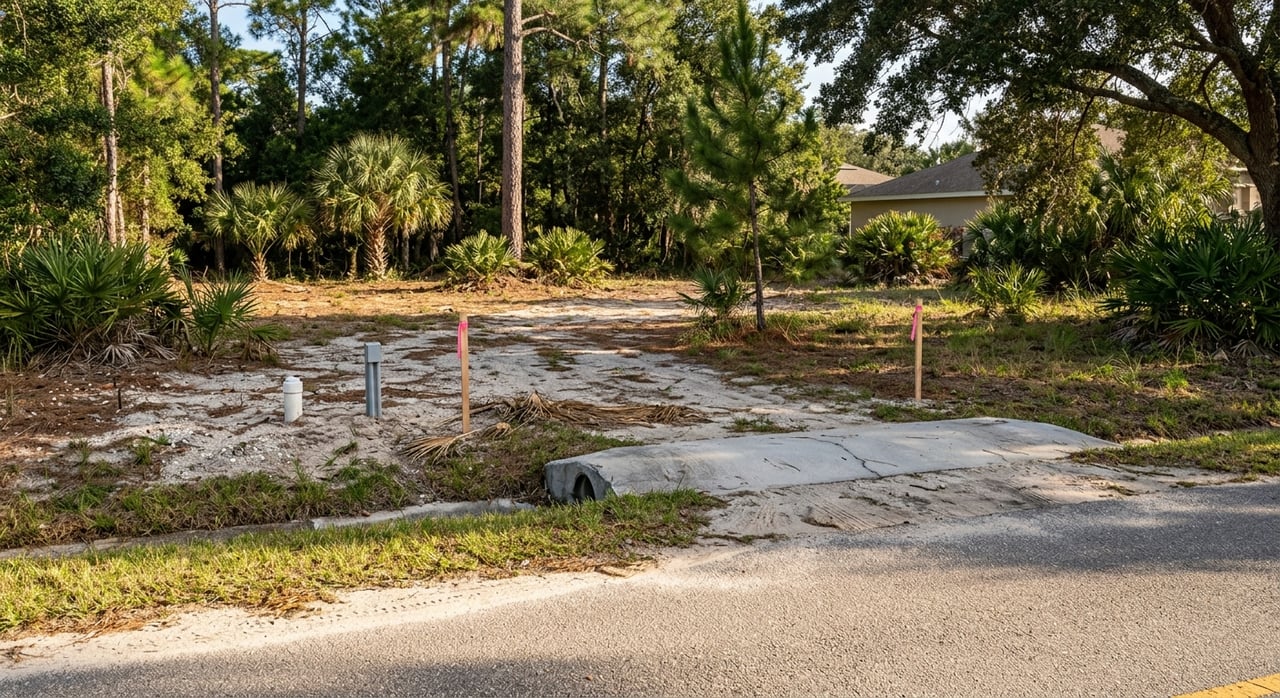
Thinking about buying a cheap lot in Lehigh Acres and holding it or building later? That can be a smart move, but only if you look past the price tag and study what the parcel can actually support. If you want to avoid surprises with zoning, utilities, access, or flood issues, this guide will help you focus on the details that matter most. Let’s dive in.
Why Lehigh Acres Lots Need Extra Review
In Lehigh Acres, a vacant lot is more than a piece of land. It should be evaluated as a future build site that falls under Lee County rules, local infrastructure conditions, and recorded property documents.
Lee County administers zoning and land development standards through its Land Development Code, and the Lee Plan serves as the county’s policy guide for development and capital improvements. The current Lee Plan also includes a Lehigh Acres Community Plan Overlay, which can add parcel-specific requirements beyond the base zoning district.
That means two lots on paper may not offer the same path forward in real life. Before you buy, you want to know how the parcel fits within county regulations and whether anything in the overlay affects your plans.
Start With Parcel Research
Your first step should be verifying the basics with county tools. Lee County GIS provides access to property reports, floodways, zoning, special districts, aerials, and infrastructure information, while the Lee County Property Appraiser search shows ownership, sales history, land details, aerial photography, and TRIM notices.
These tools are very useful, but they are informational only. Lee County GIS and the property appraiser both caution that their maps and data are not legal surveys, so recorded documents still carry weight.
This is where a careful review matters. A listing may make a lot look straightforward, but your decision should be based on parcel-level research rather than marketing language.
Check Official Records Early
Before you assume a lot is buildable or easy to develop, review the official recorded documents. Lee County Clerk Official Records include deeds, plats, certificates of title, mortgages, liens, lis pendens, judgments, and other filings tied to the parcel.
That search can help uncover easements, plat restrictions, or other recorded issues that may not be obvious from a listing sheet. The Clerk notes that it does not provide legal advice, but its records are still a key part of due diligence.
Match Zoning With Your Plans
A low price does not always mean a simple project. Lee County says the Land Development Code regulates zoning, development, land use, landscaping, parking, and subdivision design.
You should also review future land use along with current zoning. A parcel may look attractive for an investment strategy, but your intended use could still require a zoning interpretation, variance, or rezoning.
Rezoning in Lee County is not automatic. The county says it requires a complete application, staff review, and a public hearing before the Hearing Examiner, so that process can affect your timeline and costs.
Think Beyond "Can I Build?"
A better question is, what exactly can I build here, and what approvals might I need first? That is especially important if you are buying for a future home, a duplex or multi-family opportunity, or a long-term investment lot.
The goal is to understand the likely path before you make an offer. It is much easier to evaluate a parcel upfront than to solve a zoning issue after closing.
Understand Permits and Coordination
Lee County’s eConnect portal can give you a clearer picture of how development and permitting work. The county describes eConnect as a 24/7 portal for development, permitting, and code enforcement activity, including application submission, document uploads, fee payment, record tracking, and inspection scheduling.
For buyers, this shows that building on a vacant lot often involves more than one simple approval. Depending on the parcel, you may need to coordinate records, zoning, utility questions, access permits, and building steps through multiple offices.
That is one reason local guidance matters. A lot purchase can look simple at first, then become more detailed once you begin checking parcel-specific requirements.
Verify Utility Service Before You Buy
Utilities are one of the biggest issues for Lehigh Acres lot buyers. Lee County’s utility start and stop page explicitly excludes Lehigh Acres, which means you should not assume Lee County Utilities serves the parcel.
Instead, FGUA has a dedicated Lehigh Acres Utility System with its own service-related information and rates. FGUA lists a $25 connection fee for new accounts and a $170 combined deposit for the common 5/8-inch or 3/4-inch residential meter class.
Those numbers are helpful, but they do not confirm service to a specific lot. You still need to verify whether the parcel already has access, needs a meter, or may involve additional charges.
Utility Capacity Can Change
FGUA reports that it is constructing Lehigh Acres Water Treatment Plant No. 2, a 1.5 MGD reverse-osmosis facility with the potential to expand to 3 MGD. It is also rehabilitating 175 manholes and lift stations in the Lehigh Acres wastewater system.
That points to ongoing infrastructure investment, which is a positive sign for the area. Still, it does not replace parcel-level confirmation on whether water or sewer service is available at the lot you want to buy.
Check Septic, Drainage, and Digging Rules
If sewer is not available, septic may become part of your build plan. The Florida Department of Health in Lee County handles new septic-system permits for vacant lots, and county building rules require a permit for new construction.
This can affect your timeline, site planning, and preparation costs. A parcel that looks ready on paper may still need septic review before your plans can move forward.
If your lot connects to county roads or uses county rights-of-way, separate driveway or right-of-way permits may also be required. And before any digging begins, Sunshine 811 must be called at least 48 hours in advance.
Road Access Matters More Than Many Buyers Realize
Not every road in the area is maintained by Lee County. The county says its Department of Transportation maintains only designated county roads, bridges, and canals.
Other roads may be maintained by FDOT, a municipality, or private owners. That distinction matters because road maintenance, access, and right-of-way questions can influence development planning and future use.
If a lot sits on an internal subdivision road or near an edge-of-county corridor, it is worth confirming who maintains the roadway. That is a small detail that can have a big impact later.
Flood Zones and Drainage Deserve Close Attention
Flood-zone review should be part of every vacant-lot purchase in Lehigh Acres. Lee County explains that Special Flood Hazard Areas are the 1-percent-annual-chance flood zones, where flood insurance rules and floodplain management standards apply.
The county also provides a flood-zone lookup tool and notes that flood maps can change over time. For a buyer, that means you should verify current flood-zone information rather than rely on an old listing note or general area assumption.
Drainage Is Part of the Bigger Picture
Drainage also plays a major role in Lehigh Acres. LA-MSID is an independent special taxing district created by the Florida Legislature in 2015, with powers that include drainage and flood control, conservation and mitigation, roads and bridges, parks, and signage.
Its current projects include culvert replacement and a multi-year capital improvement plan. For lot buyers, that reinforces how important drainage conditions are to overall property performance.
A parcel’s flood zone is only one piece of the story. You also want to understand the broader drainage setting around the lot and nearby infrastructure.
Watch Local Infrastructure Trends
County transportation work can shape how an area functions over time. Lee County announced 2024 transportation projects in Lehigh Acres that include Bell Boulevard improvements, a Sunshine Boulevard widening alignment study, and resurfacing of more than 40 roads in eastern Lehigh Acres.
Projects like these matter because access, connectivity, sidewalks, drainage, and roadway conditions all influence how practical and attractive a lot may be in the future. They do not guarantee value changes, but they do help you understand the area’s development context.
For many buyers, this is the difference between buying land blindly and buying with a plan. The more you understand the surrounding infrastructure, the better positioned you are to choose the right parcel.
A Smart Lot-Buying Checklist
If you are considering buying investment lots in Lehigh Acres, keep this checklist in mind:
- Review Lee County GIS for zoning, floodways, special districts, and infrastructure
- Check the Lee County Property Appraiser for ownership, sales, and land details
- Search Lee County Clerk Official Records for deeds, plats, liens, easements, and restrictions
- Confirm current zoning and future land use together
- Ask whether the parcel may need a zoning interpretation, variance, or rezoning
- Verify whether FGUA service is available to the specific lot
- Check whether septic permits may be needed if sewer is unavailable
- Confirm flood-zone status and look at drainage conditions
- Verify road access and who maintains the road frontage
- Understand what permits may be required for driveways, rights-of-way, and construction
Why Local Guidance Helps
A lot purchase often looks simple until the research begins. In Lehigh Acres, zoning layers, flood review, utility questions, road access, drainage conditions, and recorded documents all work together.
That does not mean lot buying is too complicated. It means your best move is to approach each parcel as a buildability and infrastructure decision, not just a bargain land purchase.
If you want help comparing lots, organizing parcel research, or figuring out which questions to ask before you offer, Jessica Ozuna Torres can help you move forward with clear local guidance and a personal, family-first approach.
FAQs
What should you check before buying a vacant lot in Lehigh Acres?
- You should check zoning, future land use, official records, utility availability, flood-zone status, drainage conditions, road access, and any permit requirements tied to the parcel.
Does Lee County Utilities serve vacant lots in Lehigh Acres?
- No. Lee County’s utility start and stop page excludes Lehigh Acres, and FGUA operates the dedicated Lehigh Acres Utility System.
Can a cheap Lehigh Acres lot still have building challenges?
- Yes. A lower-priced lot may still involve zoning questions, septic needs, flood-zone issues, road access concerns, or utility connection questions that affect your plans.
Why do official records matter for Lehigh Acres land buyers?
- Official records can reveal deeds, plats, easements, liens, and other recorded restrictions or issues that may not appear in a listing description.
How do flood zones affect vacant lots in Lehigh Acres?
- Flood zones can affect flood insurance requirements and floodplain management standards, so buyers should verify the parcel’s current flood-zone status before moving ahead.
Who handles septic permits for vacant lots in Lee County?
- The Florida Department of Health in Lee County handles new septic-system permits for vacant lots when sewer service is not available.